Few things feel as unsettling as a steering wheel that shakes at speed. Knowing why car steering vibrates at high speed matters, because the cause can range from a simple tyre issue to a worn part that affects control. At Top Wheel Performance, we treat it as a reason to check the whole wheel, tyre, brake and suspension area, whether it is your own car or a pre-purchase car inspection in Dubai of one you hope to buy.
A vibration is a symptom, not a diagnosis. Several different faults can feel almost identical from the driver’s seat, which is why guessing can be costly. A physical inspection is how the actual cause is found.
What Steering Wheel Vibration at High Speed Means
Wheels and tyres spin much faster on the highway. Any small imbalance repeats more often each second.
At certain speeds this can match the natural frequency of the suspension and steering. The shake then becomes easy to feel through the wheel.
Many drivers notice it only within a speed band, for example around 100 to 120 km/h. It may ease above or below that range.
With long, fast roads across the UAE, this is a common complaint. It should not be dismissed as a quirk of the car.
Common Causes an Inspection Checks For
Unbalanced Wheels and Tyres
A wheel and tyre assembly should spin evenly. Balancing weights can fall off, or the balance can change after a kerb strike, a pothole or a tyre refit.
Imbalance at the front is often felt in the steering wheel. Rear imbalance tends to be felt through the seat or floor.
An inspector looks for missing weights and uneven wear that point to imbalance.
Tyre Damage and Uneven Tyre Wear
Bulges, flat spots, internal belt damage and patchy wear such as cupping can all cause shaking.
Heat is a factor in the UAE, as tyres age faster in hot conditions. The US safety regulator NHTSA notes that tyres become more prone to failure as they age. Some manufacturers recommend replacement at six to ten years, regardless of tread wear.
A dedicated car tyre inspection in Dubai looks at tread, sidewalls, age and wear patterns together.
Bent Wheels and Alignment Problems
Alloy wheels can bend after hitting a pothole or kerb, sometimes without obvious external damage.
Poor wheel alignment mainly causes pulling and uneven tyre wear. It can also contribute to unstable steering feel. Neither is proven by the vibration alone.
An inspection checks the rims and wear patterns for signs of a bent wheel or poor alignment.
Worn Suspension and Steering Components
Worn ball joints, tie rod ends, bushes or wheel bearings can introduce looseness. This can let a wheel wobble slightly at speed.
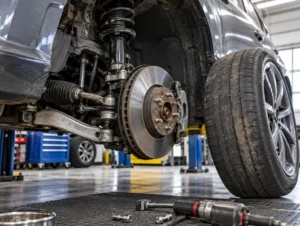
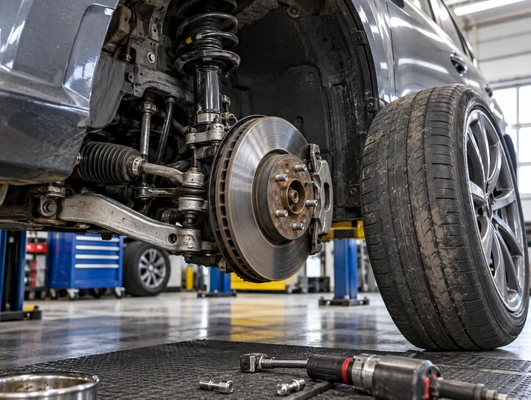
A car suspension diagnostic in Dubai or a steering system diagnostic checks these parts for play and wear.
Brake-Related Vibration
Uneven or warped brake discs usually show up as pulsing when you brake. A sticking caliper can also create vibration and excess heat at speed.
If the shake is linked to braking, a brake inspection in Dubai is a sensible step.
What Vibration Patterns Tell an Inspector
The pattern gives clues, not answers:
• Steady cruising speed: often points towards tyre or wheel balance, tyre condition or a bent wheel.
• Only when braking: more likely to involve the discs, pads or calipers, though worn suspension parts can make it worse.
• During acceleration: may relate to driveline parts such as drive shafts or engine mounts, depending on the vehicle.
• Steering feels loose or wanders: suggests worn steering or suspension components that need prompt attention.
Symptoms overlap, so these patterns should be treated as a starting point for inspection rather than confirmation of a specific fault.
How a Professional Vehicle Inspection Identifies the Cause
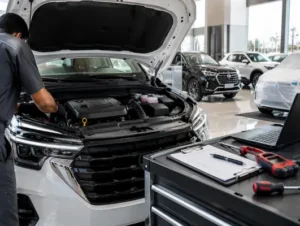
A proper inspection works through the possibilities in order rather than replacing parts and hoping for the best. It typically includes:
• Checking tyres for bulges, uneven wear, damage and age.
• Inspecting wheels for visible bends or damage.
• Examining ball joints, tie rods, bushes and bearings for play.
• Reviewing brake discs, pads and calipers.
• Road testing to see when and how the vibration appears.
It is also important to be honest about limits. An inspection can identify the likely source and recommend the next step.
Some faults, such as precise wheel imbalance, are confirmed on specialist balancing equipment during repair.
Finding the root cause matters. Replacing tyres when the real problem is a worn bearing wastes money and leaves the fault in place.
What Drivers in Dubai Should Do Next
• Reduce speed and avoid sustained high-speed driving until the cause is known.
• Note the details: the speed range, road surface and whether braking or acceleration changes it.
• Check tyre pressures and look for visible damage or bulges.
• Book an inspection promptly rather than waiting for the vibration to worsen.
• Stop safely if the shaking is severe, the steering feels loose, or you hear unusual noises or see warning lights.
If you are buying a used car, include a highway-speed test drive and arrange a professional check.
A used car inspection in Dubai can reveal wear that a short drive around the block will miss.
Frequently Asked Questions
1. Why does my steering wheel shake only at high speeds?
Higher wheel speeds amplify small imbalances or looseness. The exact cause still needs inspection.
2. Can unbalanced tyres cause steering wheel vibration?
Yes, especially on the front wheels. Damaged tyres, bent wheels or worn parts can feel similar.
3. Is it safe to drive when the steering wheel vibrates?
Not for long. Slow down and get it checked soon, as it can point to damaged tyres or worn parts.
4. Can wheel alignment cause steering vibration?
Indirectly, yes. It mainly causes pulling and uneven tyre wear, so other parts should be checked too.
5. Can a vehicle inspection identify the cause of steering wheel vibration?
Often, yes. It can narrow down the source, though some faults need specialist equipment to confirm.