It Arrived Six Months Ago. You Just Didn’t Know.
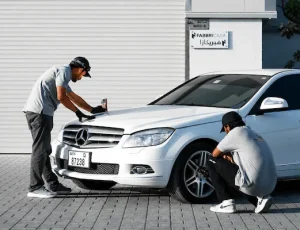
A client booked a new car inspection with us before picking up a family SUV.
The car was a current model year. The showroom had it on the floor, lights on, smelling fresh.
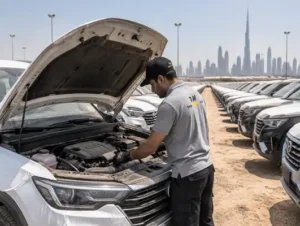
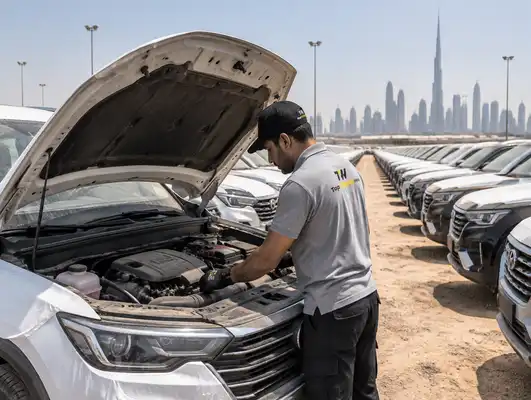
When we checked the build plate inside the door jam, we found it had been manufactured 14 months earlier. It had arrived in the UAE roughly 10 months ago. It had sat in a port stockyard, then in the dealership’s outdoor lot, through two full UAE summers.
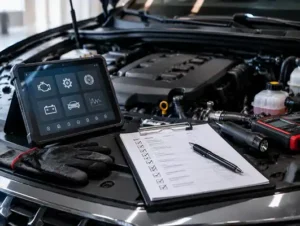
The battery load test showed early signs of stress. One tyre had a flat spot. The brake fluid moisture reading was elevated.
None of these were catastrophic. But none of them should exist on a “new” car — or at least, not on a car the buyer assumed was recently manufactured.
He renegotiated. The dealer replaced the battery and tyres before handover.
That’s what knowing the storage age of your new car can do for you.
Why UAE Conditions Make This More Important Than Anywhere Else
In most markets, a car sitting in a dealer lot for a few months is unremarkable.
Here, the conditions are significantly more demanding.
Summer temperatures regularly exceed 45°C in open stockyards. UV exposure is intense year-round. Coastal humidity near Jebel Ali and Port Rashid accelerates oxidation in rubber components and promotes moisture absorption in brake fluid.
A vehicle sitting for six months in Hamburg is in a fundamentally different situation from one sitting six months in the UAE.
How to Find Out When Your Car Was Actually Built
Check the door-jam sticker. Every vehicle has a compliance plate or manufacturer’s information sticker inside the driver’s door jam. This typically shows the month and year of manufacture — the most reliable starting point.
Decode the VIN. The 10th character of the VIN indicates the production year. Free online decoders will extract this for you instantly.
Ask for the bill of lading. This document shows when the vehicle left the factory and when it arrived at the UAE port. Reputable dealers should share it on request.
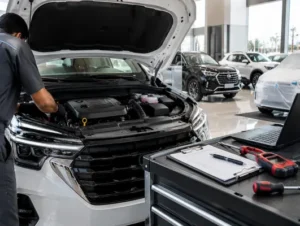
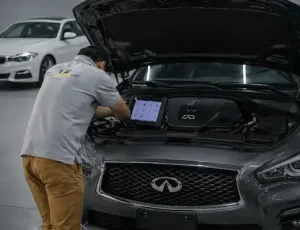
Ask our inspector. We check the build date as part of every new car inspection and flag any significant storage period in your report. If you’re considering vehicle inspection services in Dubai before accepting a new car, this check can help identify storage-related issues that may otherwise go unnoticed.
What Storage Actually Does to a New Car
Battery
A modern car battery self-discharges slowly even when unused. In extreme heat, this rate increases. A battery sitting for six to twelve months — even with occasional top-up charging — will typically show reduced capacity on a load test.
In most cases, the dealer is obligated to address this before handover. But you have to know to ask. Our battery inspection is included in the full new car check.
Brake Fluid
Brake fluid absorbs moisture from the air over time. As moisture rises, the fluid’s boiling point drops. In performance braking — fast UAE motorway stops, or descent from mountain roads in Fujairah — degraded brake fluid is a genuine safety concern.
A simple moisture test shows the current water content. Anything above around 3% warrants a flush before delivery.
Tyres
Tyres sitting on a stationary vehicle under load in high heat can develop flat spots — areas where the tyre has slightly deformed. Mild flat spots often resolve after a few kilometres. Severe ones cause a vibration that doesn’t fully go away.
Separately, rubber compounds harden and crack with UV exposure regardless of tread depth. For full detail on tyre age, check the DOT codes — we cover this in our tyre manufacturing date breakdown.
Engine Seals and Hoses
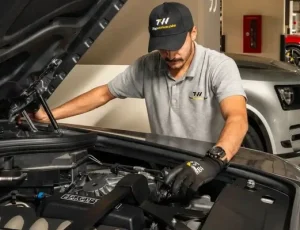
Rubber seals, gaskets, and hoses dry out and crack when exposed to heat and UV over extended periods, particularly if the vehicle hasn’t been run regularly. A visual inspection under the bonnet can catch early drying before it becomes a leak.
What’s a Reasonable Storage Period?
| Time Since Manufacture | Assessment |
|---|---|
| Under 3 months | Very good. Minimal concerns. |
| 3–6 months | Normal. Check battery and brake fluid. |
| 6–12 months | Book a new car inspection before signing. |
| Over 12 months | Request documentation and negotiate on consumables. |
Use This to Negotiate
Knowing your car has been sitting for eight months is leverage.
You can reasonably ask the dealer to replace the battery if load testing shows reduced capacity, flush the brake fluid if moisture is elevated, and replace any tyres with flat spots or age-related cracking.
A written inspection report from Top Wheels Performance is the documented evidence that makes that conversation straightforward.
Part of the Bigger Picture
Storage age connects directly to other risks — it explains why cars get repaired before delivery, why tyre ages don’t match the model year, and why the odometer at delivery sometimes tells a surprising story. For the full picture on everything that can happen before a new car reaches you, start with our hidden risks overview.
Book your inspection before you accept the keys.