Picture this. It is late in the evening, and you have found a 2021 Nissan Patrol on Dubizzle for almost AED 30,000 below market price. The seller says he is leaving the UAE on Friday and needs AED 5,000 today to hold the car. Two other buyers are “ready to pay.”
You ask to see the car first and request the chassis number. The seller stops replying. A week later, the same photos appear on another listing with a different phone number.
This is how most Dubizzle car scams start: a deal that looks too good, a deadline that feels too short, and a request for money before you see the car. Dubizzle is the largest classifieds platform in the UAE, and most sellers on it are honest. But its size also makes it a target for fraudsters who prey on buyers and sellers alike.
In this guide, our inspectors explain the most common scams, the red flags to watch for, and the exact steps that keep your money safe.
6 Common Dubizzle Car Scams in the UAE
Scammers target both sides of a deal. Buyers lose deposits on cars that do not exist, while sellers lose cars to fake payments. These are the six patterns we see most often.
1. The deposit-to-hold scam
The listing shows a desirable car at a low price. The seller asks for a “small” deposit by bank transfer to reserve it, often claiming other buyers are waiting. Once the money is sent, the seller disappears. Sharjah Police have warned about a rise in fake online car adverts that use exactly this urgency tactic.
2. The fake buyer with a forged cheque
This scam targets sellers. In April 2025, Dubai Police broke up a gang that posed as buyers on a classified website. They paid with forged cheques, arranged late-night ownership transfers, and shipped the cars abroad before the sellers discovered the cheques were fake.
3. The fake payment or delivery link
Sellers receive a WhatsApp or SMS message that appears to come from Dubizzle or a courier, asking them to “confirm payment” through a link. The page looks real but steals card details. Dubizzle states clearly that it never collects payments from buyers on a seller’s behalf.
4. The cloned listing
Fraudsters copy photos and details from a genuine ad, then repost them at a lower price with their own number. The car is real, but the person selling it is not the owner.
5. The disguised problem car
Not every scam involves a fake car. Some sellers hide what is wrong with a real one: a rolled-back odometer, flood damage, a repaired accident, or a bent chassis. These cars look clean in photos and only reveal their problems after you have paid.
6. The car with a loan or legal block
A car under bank finance cannot be transferred until the loan is cleared. Some sellers take payment and then cannot complete the transfer, or the car turns out to be blocked because of fines or a police case.
Red Flags to Watch For
Most scams share the same warning signs. If you notice two or more of these, slow down and verify before going further.
In the listing
- The price is far below market. Compare it with similar cars of the same year, mileage and specs. A gap of 20% or more needs a clear reason.
- The photos look like stock or dealer images. Run a reverse image search. If the same photos appear in other ads, the listing may be cloned.
- Key details are missing. No chassis number, no service history, and vague answers about specs (GCC or imported) are common in fake or problem listings.
- The mileage seems too low for the car’s age. Many UAE cars cover 20,000 km or more a year, so a ten-year-old car showing 60,000 km deserves a closer look.
In the conversation
- The seller is “leaving the country” or “abroad”. This story explains why you cannot see the car and why you must decide fast.
- You are asked for a deposit before viewing. A genuine seller has no reason to take money before you have seen the car.
- The seller moves you off Dubizzle chat straight away. Dubizzle encourages users to stay on its built-in chat, where suspicious links are flagged.
- The seller refuses an independent inspection. This is the strongest warning sign of all. Honest sellers welcome a used car inspection in Dubai because it helps them sell.
- The buyer wants a late-night transfer. For sellers, pressure to complete the deal at night or on a weekend, before payment can clear, matches the method used in recent fake-cheque cases.
How to Protect Yourself: 7 Steps Before You Pay
The safest deals follow the same order every time. Do not skip a step, even when the seller seems friendly and the car looks perfect.
- Keep the conversation on Dubizzle chat. Never click payment, delivery or “verification” links sent by WhatsApp or SMS. Dubizzle does not collect payments between buyers and sellers.
- See the car in person before paying anything. Meet in daylight at a public place or at the seller’s home, and ask for the original Mulkiya (registration card).
- Match the documents to the car. The name on the Mulkiya should match the seller’s Emirates ID. The chassis number on the car, the Mulkiya and the listing must all be identical.
- Check the accident and traffic history. Official RTA and police records will show reported accidents and outstanding fines.
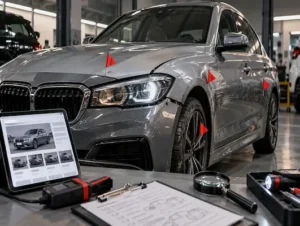
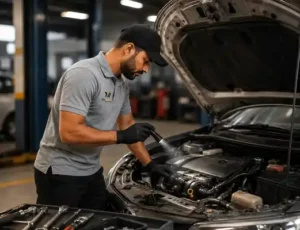
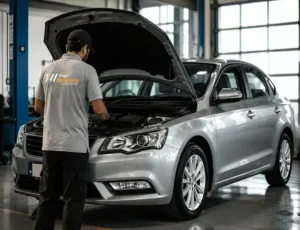
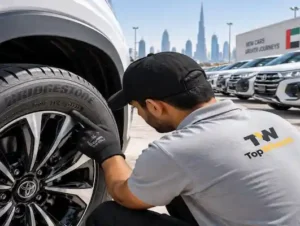
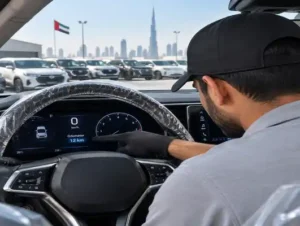
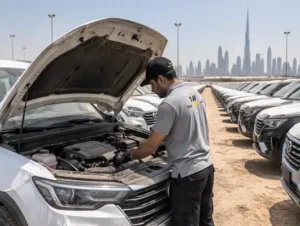
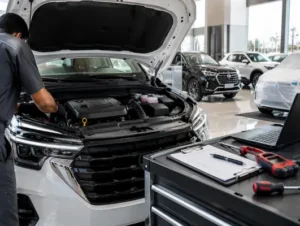
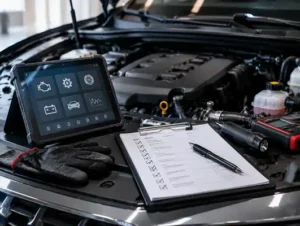
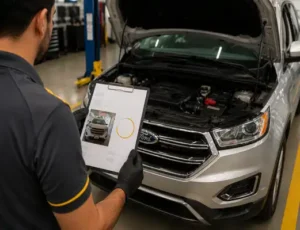
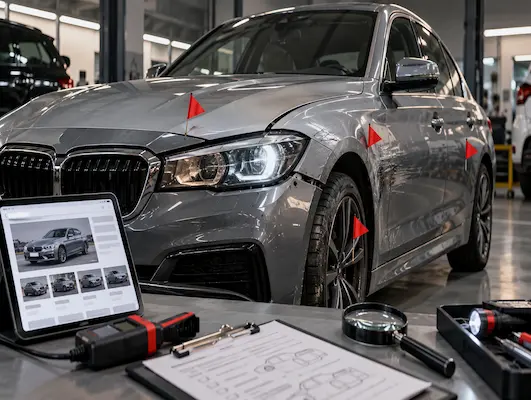
- Book an independent inspection. Records only show what was reported. A full car inspection in Dubai checks the engine, gearbox, chassis, paint thickness and electronics for hidden damage. A computer diagnostic scan can also reveal mileage stored in other modules that does not match the dashboard. If you are abroad, many inspectors can send you photos, video and a full report remotely.
- Confirm the car is free of finance. If the car is under a bank loan, ask for the bank’s clearance letter before you agree to buy. The transfer cannot be completed without it.
- Pay only at the point of transfer. Complete the payment at the registration centre when ownership changes hands. For sellers, Dubai Police advise verifying any cheque with the issuing bank and confirming the full amount is in your account before signing over the car. A screenshot or SMS is not proof of payment.
A proper pre-purchase inspection in Dubai usually takes about an hour. That hour can save you from a loss of tens of thousands of dirhams.
What to Do If You Have Been Scammed
Act quickly. The first few hours matter most, especially when money has just been transferred or a car has just changed hands.
- Call your bank immediately. Report the transfer as fraud and ask the bank to try to stop or trace it.
- Report it to the police. In Dubai, you can file a report at the nearest police station, on the eCrime platform or through the Dubai Police app. Sharjah Police ask residents to report suspicious offers on 80040.
- Report the listing to Dubizzle. This helps the platform remove the ad and protect other users.
- Keep every piece of evidence. Save chat screenshots, phone numbers, the listing link, transfer receipts and any documents the other person sent you.
If you sold a car and the payment has not arrived, report it at once. In past cases, fraudsters shipped vehicles abroad within hours of the transfer.
Frequently Asked Questions
Is it safe to buy a car on Dubizzle?
Yes, most sellers on Dubizzle are genuine. The risk comes from skipping checks. If you see the car in person, verify the documents and book an independent inspection before paying, buying on Dubizzle is as safe as any private sale.
Should I ever pay a deposit to hold a car?
Not before you have seen the car, checked the Mulkiya and inspected it. If you agree to a deposit after that, get a written receipt that shows the seller’s name, Emirates ID number and the car’s chassis number.
How can I tell if a Dubizzle listing is fake?
Look for a price far below market, photos that appear in other ads, a seller who claims to be abroad, and a refusal to show the car or allow an inspection. Any one of these is a reason to stop and verify.
Does Dubizzle send payment links to sellers?
No. Dubizzle states that it does not collect payments from buyers on a seller’s behalf. Any message asking you to enter card details to “receive” money is a phishing attempt.
Can an inspection detect a rolled-back odometer?
Often, yes. A diagnostic scan compares the mileage stored in different control modules, and inspectors check wear on the pedals, seats and steering wheel against the reading on the dashboard.
Buy With Confidence, Not Pressure
Scammers rely on urgency and trust. Your best defence is a simple routine: see the car, check the papers, inspect it independently, and pay only at the transfer. A seller who resists any of these steps has told you what you need to know.
Top Wheels Performance inspects cars at the seller’s location across all seven emirates, with a 400+ point check and a detailed digital report. Before you pay for your next Dubizzle car, book your inspection today.