From the inspection team at Top Wheels Performance — covering pre-purchase, new car, and post-accident inspections across the UAE.
Three Different Problems. Three Different Responsibilities.
A buyer in Sharjah collected a new pickup truck and noticed something within the first week.
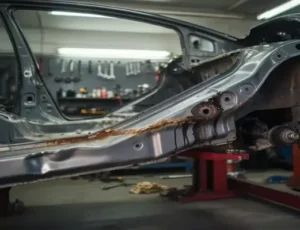
A small rust bloom near the rear lower quarter panel. Barely visible. Easy to miss.
He brought it to us. Our inspector found what appeared to be a minor dent that had been inadequately repaired before delivery — paint applied over unprimed bare metal, and the UAE coastal air had done the rest.
Here’s what made the situation complicated: he needed to know whether this was a manufacturing defect, a transit damage repair, or a storage issue. The answer determined who was responsible — and therefore who would fix it.
Getting the answer right meant getting the right outcome.
Why the Distinction Matters
When something goes wrong on a brand-new car, the instinct is simply to take it back and demand it be fixed. That often works. But knowing the root cause gives you a much clearer basis for the conversation.
Manufacturing defect → Covered by the manufacturer’s warranty. The factory is responsible for defects in materials or workmanship present at the point of production.
Transit damage → The vehicle was damaged during shipping or port handling. Responsibility lies with the shipping company or importer, typically covered by cargo insurance.
Storage damage → The vehicle degraded while sitting in a stockyard or dealer lot. Responsibility generally lies with whoever stored it.
Pre-delivery repair → The damage was repaired before delivery without the buyer’s knowledge. This is a disclosure issue — the dealer’s responsibility.
How to Tell What You’re Looking At
Signs of a Manufacturing Defect
Manufacturing defects tend to be consistent and systematic rather than localised. They often relate to specific production processes.
What to look for:
- Uneven paint texture across a whole panel (not just one area)
- Moulding irregularities in plastic trim
- Electrical or software issues that appear immediately and consistently
- Rust that originates from inside the panel outward — “bubble rust” — indicating poor factory primer application
Document everything thoroughly. Photos, date of discovery, written notification to the dealer — this creates a clean foundation for your warranty claim.
Signs of Transit Damage
Transit damage is localised. It happens to one area of the car in a pattern consistent with an impact, crush, or scratch from a specific physical cause.
What to look for:
- Scratches concentrated along edges, corners, or lower body panels — the most exposed areas during loading and unloading
- Dents on the bonnet, roof, or bootlid from debris during transport
- Damage to door edges from adjacent vehicles on the carrier
- Broken exterior trim that appears snapped rather than worn
Transit damage that’s been repaired will show in paint thickness readings — and may show undercarriage evidence even when surface repairs look clean. Our chassis inspection includes an undercarriage check that catches impact evidence even after cosmetic repair.
Signs of Storage Damage
Storage damage affects either the exterior surfaces or the mechanical systems — depending on whether the car was stored indoors or outdoors.
Exterior:
- Surface oxidation or light rust on lower panels, especially near rocker panels
- UV fading or micro-cracking in plastic trim and rubber seals
- Water marks or salt spray staining
- Tyre flat spotting — a low-frequency vibration that may or may not resolve with driving
Mechanical:
- Battery showing reduced capacity on load testing
- Elevated moisture content in brake fluid
- Rust on brake rotors beyond minor surface rust
- Evidence of condensation in the engine bay
The mechanical side of storage damage connects directly to how long the car sat before delivery. Checking that first gives you the context for everything else.
Signs of a Pre-Delivery Repair
A pre-delivery repair is often what connects earlier damage to the car you’re now looking at.
What to look for:
- Paint thickness readings significantly higher than adjacent panels
- Colour or sheen mismatch visible in natural light
- Overspray traces in rubber seals or door jams
- Fresh underseal in a localised undercarriage area
We go deeper on detection methods — including how to use a paint gauge yourself — in our breakdown of cars repaired before delivery.
Who Do You Go To?
Manufacturing defect: Contact the dealer and make a formal warranty claim. If disputed, escalate to the manufacturer’s UAE regional office.
Transit or importer damage: The dealer handles this with the importer. You shouldn’t need to contact the shipping company directly — but be aware that if the damage was repaired pre-delivery, an insurance claim may already have been processed without your knowledge.
Storage damage: The dealer’s responsibility. Degraded batteries, brake fluid, and tyres from storage are legitimate items to address before handover.
Undisclosed pre-delivery repair: You have grounds to request compensation, a replacement vehicle, or sale cancellation depending on severity.
In all cases, an independent inspection report is your strongest foundation. It’s a professionally documented, photo-backed record — not a conversation you have to win from memory.
The Takeaway
The car in that showroom is the end result of a long journey. Something could have happened at the factory, on the ship, in the stockyard, or at the PDI facility. Knowing what to look for — and what category the damage falls into — is what separates a buyer who can protect themselves from one who discovers the problem six months later.
For everything that can go wrong before a new car reaches you — repairs, storage, odometer, tyres — the full breakdown is in our hidden risks overview. And for an independent check before you sign, book a pre-purchase inspection with Top Wheels Performance. We come to you.
Top Wheels Performance | Car Inspection in Dubai | All 7 UAE Emirates