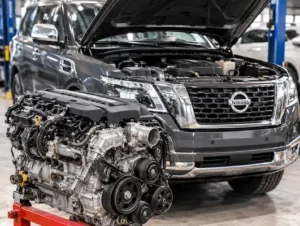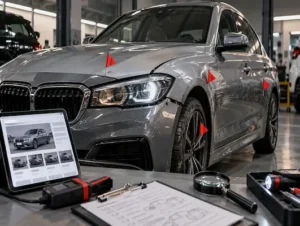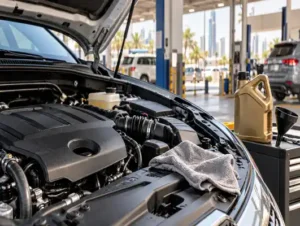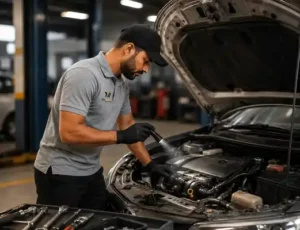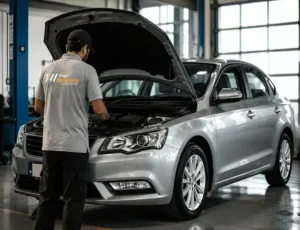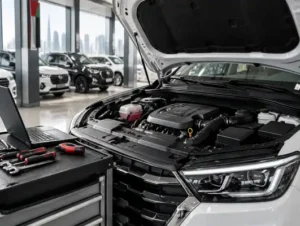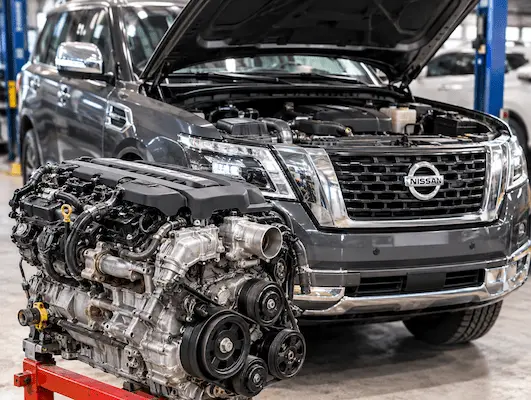
Imagine you find a clean, fairly priced Nissan Patrol, and during the viewing the seller mentions that the engine was replaced last year. It sounds reassuring at first, but it raises a fair question: why did the original engine need replacing, and was the new one fitted properly? At Top Wheels Performance, we think every buyer should ask this before paying. A Nissan Patrol Engine Swap is not automatically a bad sign, but it changes what needs to be verified, and a pre purchase car inspection in Dubai is the most practical way to check it.
This guide explains what an engine swap means in a Patrol, why owners do it, what it can reveal about the vehicle’s history, and what to check before you commit.
What a Nissan Patrol Engine Swap Actually Means
The phrase covers several different situations, and they carry different levels of risk:
• Like-for-like replacement: the original engine is replaced with the same engine code, either a used, reconditioned or new unit.
• Engine rebuild: the original block stays, but major internal components are replaced or machined.
• True engine swap: a different engine type or generation is installed, which usually requires changes to mounts, wiring, cooling and sometimes the transmission.
Patrol generations have used quite different engines over the years, so what is correct for one model and year may be wrong for another. Nissan’s official newsroom page for the Y62 Patrol is a useful reference. It lists the VK56VD engine code, its 5,552 cc displacement, its direct-injection V8 layout and its pairing with a 7-speed automatic, which gives buyers a baseline to compare with what is actually under the bonnet. Specifications vary by market and model year, so always confirm the details for the exact vehicle you are viewing.
Why a Previous Owner Might Replace the Original Engine
There are many reasons, and some are perfectly legitimate:
• Overheating damage, such as a failed head gasket or warped components
• Oil starvation or lack of maintenance
• Water ingestion or other severe mechanical failure
• Accident damage affecting the engine or its mounting points
• Very high mileage and general wear
• A deliberate upgrade or change in engine type
The reason matters more than the swap itself. A single failure that was properly repaired is very different from an engine that failed because of a problem nobody fixed.
Can an Engine Replacement Indicate Bigger Hidden Problems?
Sometimes, yes. A replacement engine can be the visible result of a deeper issue that is still present. For example:
• If the engine fails from overheating, the cooling system may still be faulty.
• If it failed from poor lubrication, related components or the transmission may also have been affected.
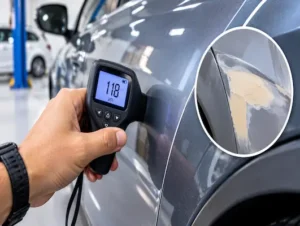
• If the swap followed an accident, there may be structural or front-end damage behind it.
• If the work was done to hide a problem before selling, the paperwork and installation quality may not hold up.
The odometer is another concern. A replacement engine can have a very different real mileage from the number displayed on the dashboard, which affects how much life the vehicle has left.
That said, a well-documented replacement carried out by a competent workshop can leave the vehicle in good condition. The goal is to separate that case from a rushed or poorly executed one.
Signs a Nissan Patrol May Have Had an Engine Replaced
None of these signs proves a swap on its own, but together they are worth investigating:
• An engine number or stamping that looks unusual, altered or inconsistent with the vehicle’s details
• A very clean engine next to a visibly aged engine bay, or the reverse
• Mismatched, non-original or recently changed bolts, brackets, hoses and clamps
• Tool marks on mounts and fasteners that suggest recent removal
• Wiring that looks taped, spliced or routed differently from the factory layout
• Fluid seepage at joints that look recently disturbed
• Service history gaps that line up with the period of the repair
• A seller who cannot explain when, why or by whom the work was done
How to Check Engine Identification and Compatibility
Engine number verification
Start with the engine number and code stamped on the block. Compare it with the vehicle’s documents and confirm that the engine type suits that specific Patrol model, year and market. If the seller says the engine was replaced, there should be a record of the replacement, and the details should be consistent across the paperwork and the physical engine.
Matching the engine to the rest of the vehicle
A replacement engine needs to be compatible with the vehicle around it, not just the same size. That includes:
• Transmission compatibility: the gearbox must match the engine’s power and torque delivery and be properly aligned.
• ECU compatibility: the engine control unit must be correct for the engine, otherwise warning lights, poor running or communication faults can appear.
• Emissions and sensor setup: sensors and related components should match the engine fitted.
Engine Installation Quality: Mounts, Wiring and ECU
Engine mounting
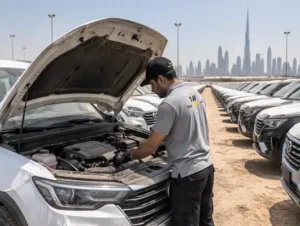
Engine mounting problems are common in poorly done work. Look for uneven or unusual vibration, mounts that look stressed or newly modified, hoses or wiring rubbing against metal, and exhaust components sitting too close to other parts. Misalignment between the engine and transmission can also cause drivability issues and premature wear.
Wiring modifications and electrical checks
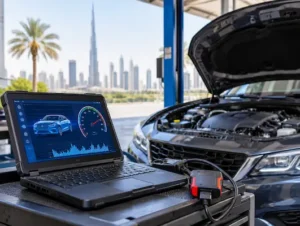
Wiring is one of the clearest indicators of installation quality. Factory looms are neatly routed and secured. Hurried work often shows up as spliced wires, loose connectors, unprotected joins or extra wiring that does not belong. Poor electrical work can cause intermittent faults that are hard to trace later. A car computer diagnostic helps reveal stored fault codes and communication problems with the ECU that are not obvious during a short viewing.
Cooling System and Transmission Concerns
The cooling system deserves close attention in UAE conditions, where heat puts constant demand on it. After an engine replacement, check that the radiator, hoses, fan, thermostat and coolant flow are suitable for the engine fitted, and that there are no leaks or signs of past overheating. Any engine that failed from overheating once can fail again if the cause was never corrected.
The transmission also needs checking. Hard or delayed shifts, slipping, vibration under load or unusual noises can suggest alignment issues, wear or compatibility problems. A dedicated car transmission inspection can show whether the gearbox is working properly with the replacement engine.
How Poor Engine Replacement Work Affects Reliability
When installation is careless, the effects often appear gradually rather than immediately:
• Recurring overheating or coolant loss
• Persistent vibration and accelerated wear on mounts and drivetrain parts
• Oil or fluid leaks from poorly sealed connections
• Electrical faults and warning lights that keep returning
• Rough idle, hesitation or inconsistent performance
• Difficulty servicing the vehicle because of non-standard parts or modifications
• Lower resale value if the work cannot be documented
These problems can become expensive, which is why they should be identified before the purchase rather than after.
Questions to Ask the Seller Before Buying
The seller’s answers, and how openly they are given, tell you a lot. Ask:
• When was the engine replaced, and at what odometer reading?
• Why was it replaced?
• Who carried out the work, and can you see the invoices?
• Was the replacement engine new, reconditioned or used, and what was its mileage or condition?
• Was a warranty provided on the engine or the workmanship?
• Were the cooling system, transmission and related components also checked or replaced?
• Has the vehicle been in an accident, and has the same problem returned since?
Vague or inconsistent answers are worth treating seriously. If a listing looks suspiciously cheap or the seller avoids detail, our guide to Dubizzle car scams explains the warning signs to look for.
What a Professional Vehicle Inspection Should Examine
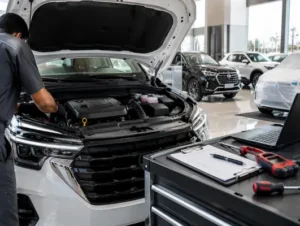
A vehicle with a replaced engine needs a closer look than an average used car. A thorough inspection should include:
• Engine identification markings and consistency with the vehicle’s details
• Engine mounting condition and engine bay installation quality
• Wiring, harness condition and electrical system checks
• Computer diagnostics and fault code scan
• Cooling system condition, leaks and signs of overheating
• Transmission operation and compatibility
• Fluid condition and signs of leaks
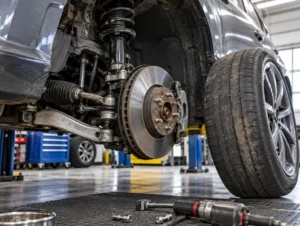
• Underbody and chassis condition, including any sign of accident damage
• A road test to judge performance, vibration, shifting and noise
Top Wheels Performance offers Nissan inspection in Dubai and a dedicated car engine inspection in Dubai for buyers who want a closer look at the engine itself.
Arrange the Inspection Before You Pay
The best time to inspect a vehicle is before any deposit or payment is made. Once money has changed hands, you have far less leverage to negotiate, walk away or ask for repairs. An inspection report gives you documented findings you can use to decide whether to proceed, negotiate the price or look elsewhere. A seller who is reluctant to allow an independent inspection is itself useful information.
Final Thoughts
A replacement engine does not automatically make a Nissan Patrol a bad purchase, but it is a reason to slow down and verify everything. The key questions are why the engine was replaced, whether the replacement suits the vehicle, and whether the work was done to a good standard. Checking engine identification, installation quality, electrical compatibility, the cooling system and the transmission gives you a much clearer picture than a test drive alone.
Top Wheels Performance provides independent vehicle inspections that help buyers understand the real condition of a used car before they commit. If you are considering a Patrol with a replaced engine, you can Contact Us to arrange an inspection before you make a payment.
Frequently Asked Questions
Is buying a Nissan Patrol with a replaced engine always risky?
No. A documented replacement fitted properly can be a sound repair. The risk comes from missing records or poor workmanship.
How can I tell if a Nissan Patrol has had its engine replaced?
Check for a mismatched engine number, non-original bolts, unusual wiring and tool marks on mounts, then confirm with records and an inspection.
Does a replaced engine affect the value of a used Patrol?
It can. Undocumented replacements are harder to value and usually lead to price negotiation.
What documents should I ask for when a Patrol has a replacement engine?
Ask for workshop invoices, the date and odometer reading of the work, the engine’s source and any warranty.
Should I inspect the Patrol before or after paying a deposit?
Before. It gives you documented findings to negotiate with or walk away on.