Buying a used turbocharged car can be rewarding, but a worn turbo can quickly turn a good deal into an expensive repair. So, how do you know if your turbocharger is bad before you hand over any money? At Top Wheels Performance, our car inspection in Dubai focuses on spotting mechanical problems like this early. This guide explains the warning signs, likely causes and what to check before you buy.
Why Turbocharger Health Matters When Buying a Used Car
A turbocharger is one of the costlier components to repair or replace on a modern engine, and its condition often reflects how well the car has been maintained.
How a Turbocharger Works
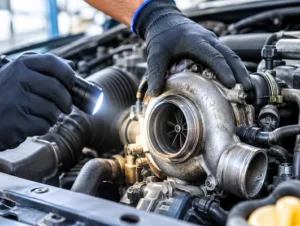
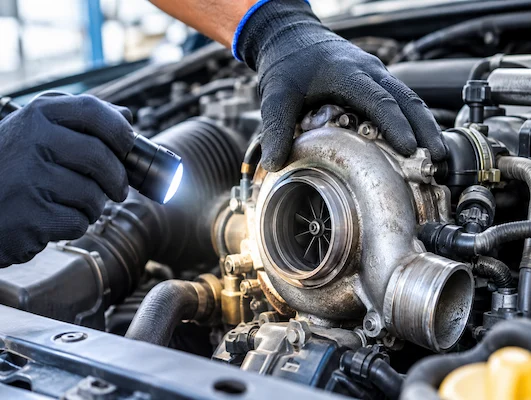
A turbocharger uses exhaust gas to spin a turbine. The turbine drives a compressor, which pushes extra air into the engine so it can burn more fuel and make more power from a smaller displacement.
The shaft spins at very high speed and depends on a constant supply of clean engine oil for lubrication and cooling. Turbo boost pressure, the extra air pressure created by the compressor, should build smoothly as you accelerate. When something in this system fails, power delivery usually suffers first.
Bad Turbocharger Symptoms: Warning Signs to Watch For
These turbocharger failure signs are worth noting, but none of them proves a faulty turbo on its own.
Loss of Engine Power and Slow Acceleration
Loss of engine power is the most common complaint. The car may feel sluggish, hesitation under load or struggle on inclines, often because boost pressure is lower than it should be.
Excessive Blue or Black Exhaust Smoke
Blue-tinted exhaust smoke suggests that engine oil may be burning. Worn turbocharger components can be one possible cause, although internal engine wear can produce similar symptoms. Black smoke usually means the engine is getting too much fuel or too little air.
Whining, Whistling or Grinding Noises
Turbocharger noise that rises with engine speed, such as a loud siren-like whine or metallic grinding, can indicate worn bearings or a damaged compressor wheel. Pay attention to changes in sound rather than the faint whistle many turbos make normally.
Increased Oil Consumption or Oil Leaks
Turbo oil leaks may appear around the oil feed and drain lines or the turbo housing. Excessive oil accumulation inside intake piping or intercooler hoses may indicate a problem, although a light oil film can be normal in some turbocharged engines. Frequent top-ups with no visible leak are also worth questioning.
Poor Fuel Efficiency and Reduced Performance
When an engine struggles to deliver expected performance, fuel economy often drops too. Treat it as a weak indicator on its own.
Common Causes of Turbocharger Failure
Most failures trace back to a few causes:
• Poor lubrication: restricted oil supply, blocked drain lines or low-quality oil.
• Oil contamination: carbon or debris in the oil, often linked to extended oil change intervals.
• Foreign objects: small debris entering the compressor or turbine and unbalancing the wheels.
• Overspeed and excess heat: engine faults or unapproved tuning pushing the turbo beyond its limits.
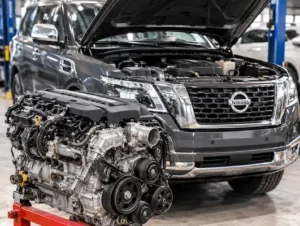
Previous work matters too. Debris left behind after an engine overhaul can damage turbo bearings, so always ask about repair history. Our article on hidden engine problems in used cars explains how a replacement engine can mask bigger issues.
How to Check Turbocharger Condition Before Buying a Used Car
You can gather useful clues before paying for an inspection:
• Ask for service records, oil change intervals and any turbo or engine replacement history.
• Listen from a cold start for whining, rattling or grinding.
• Watch the exhaust at start-up and under acceleration for blue or black smoke.
• On a test drive, check that acceleration feels smooth and consistent, and note any warning lights.
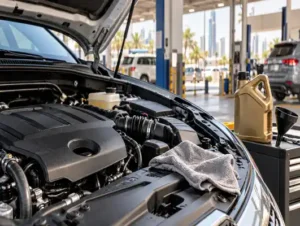
• With the engine off and fully cooled, look for oil residue around turbo pipework and check the oil level and condition.
Keep safety in mind. Turbochargers and exhaust manifolds become extremely hot, so never touch them after the engine has run. Avoid removing hoses or attempting boost tests yourself, and test drive only where it is safe and legal.
These checks are only a starting point. Many turbo faults are not obvious during a short viewing, which is why a pre-purchase car inspection in Dubai gives a far clearer picture.
How a Professional Inspection Reveals Hidden Turbo and Engine Problems
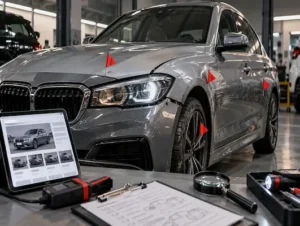
A professional car engine inspection in Dubai looks beyond what you can see and hear. Inspectors can check for oil and coolant leaks, examine hoses and pipes, review fluid condition and run an OBD computer scan that may show stored fault codes.
Together, these findings can help identify visible problems, such as damaged hoses, leaks or stored fault codes. However, confirming internal turbocharger damage, including worn bearings, may require further specialist testing. A written report with photos gives you evidence to negotiate or walk away. If a turbo concern remains, further diagnosis by a turbo specialist may be the sensible next step.
Final Thoughts
A failing turbo rarely announces itself clearly. Reduced power, smoke, noise and oil use all deserve attention, but they need proper diagnosis first. Finding problems before purchase can save you from inheriting an unexpected repair bill.
Top Wheel Performance helps used-car buyers in Dubai make informed decisions through detailed vehicle inspections. If you are considering a turbocharged car, visit our Contact Us page to discuss your inspection needs.
Frequently Asked Questions
What are the most common bad turbocharger symptoms?
Loss of power, blue or black smoke, whining or grinding noises and higher oil use. Other faults can cause these too, so they need diagnosis.
Can a car run with a failing turbocharger?
It may run, but with reduced power and possible smoke. Driving on can cause further engine damage, so get it checked promptly.
What causes a turbocharger to fail?
Poor lubrication, contaminated oil, foreign objects, and overspeed or excess heat are the main causes.
Can I check a used car’s turbo myself before buying?
You can review service records, listen for noises and look for smoke or oil residue on a cooled engine. A professional inspection gives a clearer result.
Does a pre-purchase inspection detect turbo problems?
It can find leaks, hose issues, fluid problems and stored fault codes that may point to turbo faults. Any remaining concern may need a turbo specialist.