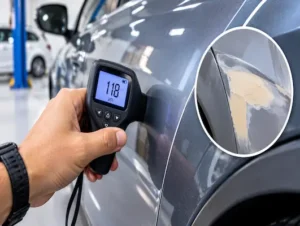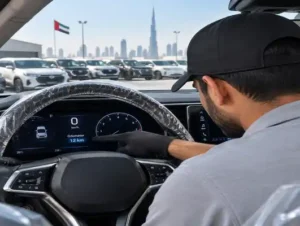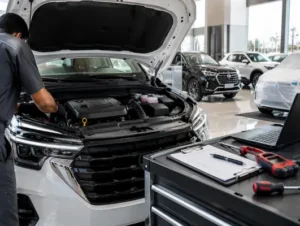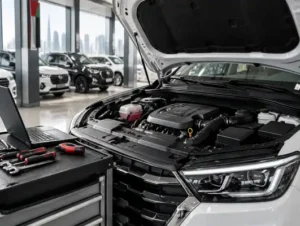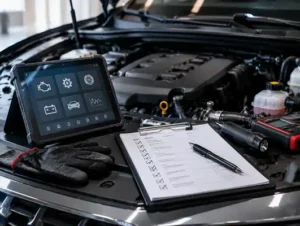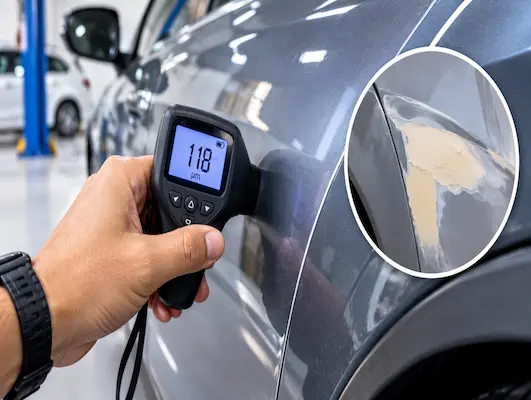
A glossy finish can hide a lot. When you are buying a used car in the UAE, a Pre-Purchase Car Inspection in Dubai gives you a trained second opinion on things a test drive cannot show, and paint thickness is one of the most revealing checks. Repainted Car? A gauge can show where a panel has been refinished, filled or replaced, which helps you ask better questions before you pay.
What Is a Paint Thickness Test?
A paint thickness test measures the total coating on a body panel without damaging it. Readings are given in microns, where one micron is one-thousandth of a millimetre.
The figure covers everything above the bare metal: primer, colour coat, clear coat and anything added during a repair, such as filler. It shows which panels differ from their neighbours, not why.
How a Paint Thickness Gauge Works
Hand-held gauges are non-destructive, and the method depends on what the panel is made of. DeFelsko’s guide to coating thickness measurement, written by a manufacturer of coating inspection instruments, describes the main principles.
• Magnetic induction is used on steel. The probe senses how far it sits from the steel beneath the paint, so a thicker coating means a larger gap.
• Eddy current is used on non-ferrous metals such as aluminium. A high-frequency coil induces currents in the metal, and the response changes with the distance from the probe.
• Dual-mode gauges combine both and switch automatically, which suits cars built from mixed materials.
Plastic bumpers and composite panels need a different tool, such as an ultrasonic gauge, so a basic magnetic gauge cannot read them.
Why Factory Paint Thickness Matters
Manufacturers apply paint in controlled, largely automated processes, so original paint tends to be fairly even across similar panels on the same car.
What counts as normal varies by manufacturer, model year, panel material and measurement location. For that reason, no single range of microns can prove a repaint. Inspectors compare panels on the same vehicle, such as left against right or door against door, instead of checking numbers against a chart.
How Inconsistent Readings Can Reveal Repainting
These are the patterns an inspector looks for:
• One panel reading clearly higher than the rest of the car
• Matching panels, such as both front doors, that disagree
• Readings that climb toward an edge, which can point to a localised respray or blend
For example, if both doors on one side read similarly and the adjacent front wing reads far higher, that wing has probably been refinished. The next step is finding out why: a car park scrape, stone chips or something more serious.
Original Paint, Refinishing and Repaired Panels
Original paint is consistent. A refinished panel carries extra layers, so it usually reads higher. A repaired panel, where metal was reshaped and filled before painting, often reads higher and less evenly. A skilled body shop can keep the difference small, so a modest gap proves nothing either way.
How Paint Thickness Testing Identifies Body Filler and Previous Repairs
Body filler is not metal. On a steel panel, a gauge treats it as extra coating, so filled areas often read far above the surrounding paint. Taking readings in a grid across a panel can show a localised patch instead of an even respray.
Visual clues help confirm a suspicion: wavy reflections, uneven panel gaps, overspray on rubber seals, or a colour shift in daylight.
Which Areas of a Car Should Be Checked?
Take several readings per panel (top, middle, bottom and near the edges) and compare each with its opposite side:
• Bonnet and front wings
• Every door, including the lower sections
• Roof and pillars
• Rear quarter panels and boot lid or tailgate
What Paint Thickness Readings Cannot Tell You
A reading alone never confirms an accident. Keep these limits in mind:
• A repaint can follow a scratch, stone chips or a failing clear coat.
• Gauges cannot see structural damage, airbag history or mechanical faults.
• Paint protection film, ceramic coatings and polishing can alter readings.
• Results depend on the manufacturer, panel material, curvature, edge distance and calibration. The same DeFelsko guide notes that curvature, substrate thickness and distance from an edge affect results, and that gauges should be checked against traceable reference standards.
Why Paint Thickness Testing Matters When Buying a Used Car in Dubai
Used cars in the UAE come from several sources, including imports, and online records only list accidents that were reported. Our guide to Car Accident History Check in Dubai explains why paperwork can look clean even when a panel has been replaced.
A documented repaint gives you something concrete to raise with the seller: ask for repair records, adjust the offer, or walk away.
How to Combine Paint Thickness Testing With a Complete Vehicle Inspection
Paint readings work best alongside other checks:
• Panel gaps, overspray and colour match in daylight
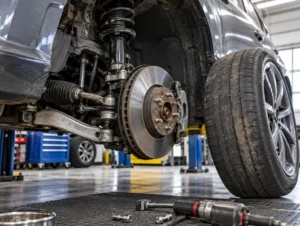
• Underbody and structure, covered in a Car Chassis Inspection in Dubai, where welds and alignment can be examined
• Stored fault codes from a Car Computer Diagnostic, including airbag and ABS systems
• Service history, ownership papers and a test drive
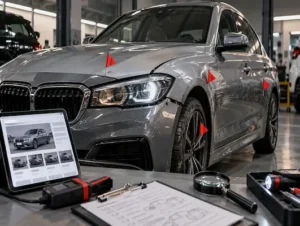
A full Car Inspection in Dubai brings these together in one report. Before paying a deposit, make sure the seller allows a third-party inspection, and get the findings in writing.
Frequently Asked Questions
Can a paint thickness test confirm a car has been in an accident?
No. It shows that a panel has extra coating, but not why. A scratch repair and a collision repair can look the same on a gauge.
What is a normal paint thickness for a car?
There is no single figure. It varies by manufacturer, model year, panel material and measurement point, so inspectors compare panels on the same car.
Can a gauge measure paint on aluminium or plastic panels?
Aluminium needs an eddy current or dual-mode gauge. Plastic and composite panels need a different method, such as an ultrasonic gauge.
Does a repainted panel mean I should not buy the car?
Not automatically. Many repaints are cosmetic, so ask for repair records and check the structure and mechanical condition before deciding.
Can I test paint thickness myself?
You can use a basic gauge, but results depend on calibration, panel material and experience reading the numbers. Treat your own readings as a prompt for a professional check.