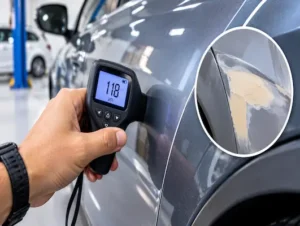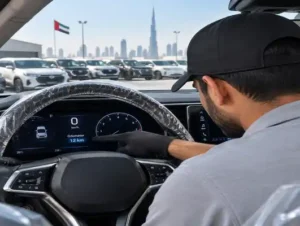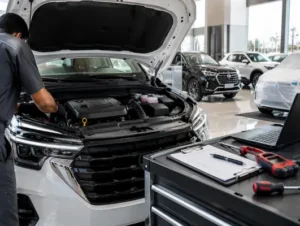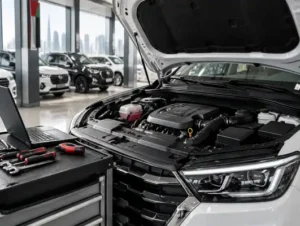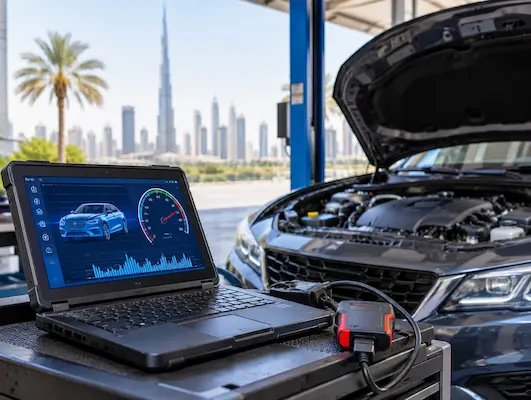
A professional pre-purchase car inspection in Dubai is one of the few reliable ways to confirm whether a used car’s mileage is genuine. At TW Performance, mileage is one of the first things we question.
Mileage drives price, maintenance timing and resale value. A car showing 70,000 km instead of 170,000 km can look like a bargain while hiding engine, transmission and suspension parts close to expensive work.
What Is a Mileage Blocker and How Does It Work?
A mileage blocker is a device or software modification that stops a vehicle’s recorded mileage from increasing. The aim is to make a car look far less used than it really is.
A classic odometer rollback lowers the displayed figure. A blocker usually freezes it.
Modern cars use digital clusters and data networks, so odometer tampering is now largely electronic. It typically involves:
• Altering the mileage signal a module sends
• Reprogramming stored mileage values
• Fitting an aftermarket device into the vehicle’s data line
UAE media have reported buyers who learned the real mileage only after purchase. Experts quoted there advise a mechanic check the vehicle’s control unit instead of trusting the dashboard alone.
Can a Pre-Purchase Inspection Detect Mileage Tampering?
Often, but not always. A thorough used car inspection looks for a mileage discrepancy: a point where the dashboard, the vehicle’s modules, the service records and the physical wear disagree.
No inspection can promise 100% detection. The result depends on:
• The vehicle’s technology
• What data its modules store and make readable
• How carefully the tampering was done
A good inspector tells you when the evidence is inconclusive. That honesty is part of the report’s value.
How Mechanics Identify Signs of a Mileage Blocker
No single check settles the question. Inspectors combine several methods and look for results that support or contradict each other.
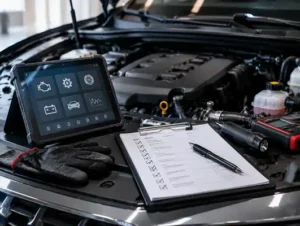
Electronic Diagnostic Scanning
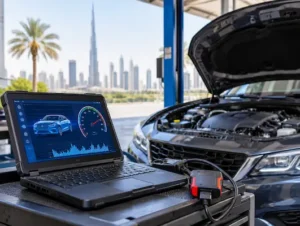
An OBD scan reads fault codes and, on supported models, module data and stored mileage. Inspectors look for:
• Communication or instrument cluster faults
• Aftermarket devices or unusual wiring near the cluster and diagnostic port
A dedicated car computer diagnostic goes deeper than a basic code reader, although readable data still varies by brand and model year.
ECU and Module Data Comparison
Mileage-related data is often stored in several places: the engine ECU, transmission control unit, ABS module, body control module and instrument cluster.
If the cluster shows 80,000 km but another module holds a clearly higher figure, that mileage discrepancy needs an explanation.
This is strong evidence when the data exists. Some modules store nothing useful, so the comparison is not possible on every car.
Vehicle Service and Maintenance Records
Dealer service history, workshop invoices and earlier inspection reports give dated mileage readings. Inspectors check that:
• Figures rise logically over time
• There are no sudden drops or long gaps
• The documents look consistent
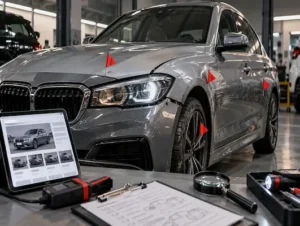
A written vehicle inspection report records what was found, so you can compare it with the seller’s claims.
Physical Wear and Tear Assessment
Wear should match the dashboard figure. Inspectors examine:
• The driver’s seat bolster and steering wheel
• The gear selector and pedal rubbers
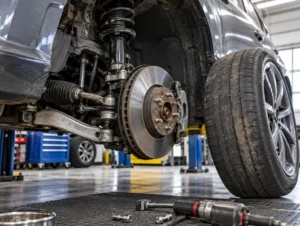
• Brake discs, tyres and suspension bushings
A car showing 50,000 km with a polished steering wheel and badly worn pedals raises questions. Wear alone is not proof, since driving style and climate matter, but it helps confirm or challenge the electronic findings.
Why Mileage Blockers Are Difficult to Detect
Some blockers are installed neatly and leave no obvious fault codes. Others change only what the cluster displays.
Common obstacles include:
• Older models that have only one mileage source
• Cluster replacement or reprogramming that resets values
• Forged service documents that support a false story
Consider a used SUV advertised at 58,000 km. The cluster and engine ECU agree, yet the last dealer service entry records 74,000 km, and the brake discs and pedals show heavy wear.
No single finding proves tampering. Together, they give the buyer a strong reason to request documents, renegotiate or walk away.
Why a Professional Inspection Matters Before Buying a Used Car
A seller’s word or a dashboard figure is not enough. An independent inspection gives you an unbiased view before any money changes hands.
The real mileage decides when you will face:
• Timing component and transmission servicing
• Suspension and brake replacement
A clear report lets you negotiate using documented findings, ask the seller to explain inconsistencies, or decline the car. Inspecting at the seller’s location lets you do this before paying a deposit.
Final Thoughts
A pre-purchase inspection cannot promise to expose every mileage blocker, but it greatly improves your chances of spotting inconsistencies. Treat the advertised mileage as a claim to verify.
If diagnostics, module data, records and wear all agree, you can buy with confidence. If they don’t, ask for documents, request further checks or move on.
Frequently Asked Questions
Can an OBD scan alone reveal a mileage blocker?
Not reliably. A scan is a starting point. Conclusive findings come from comparing mileage across modules, records and physical wear.
Is odometer tampering illegal in the UAE?
It is treated as fraud, and buyers have reported complaints to the Ministry of Economy. For a specific case, speak to a lawyer or the relevant authority.
Does low mileage always mean tampering?
No. Many low-mileage cars are genuine. Records and matching wear are what confirm it.
When should I book the inspection?
Before paying any deposit or transferring ownership, the findings can still change your decision.
What if the inspector finds a mismatch?
Ask the seller for documented proof. If they cannot provide it, renegotiate or walk away.