Buying a used car requires more than checking its exterior, mileage, and service history. Engine mounts are small but important components that hold the engine and help reduce vibrations transferred into the vehicle cabin. Worn or damaged mounts can cause excessive engine movement, unusual knocking sounds, and noticeable vibration. At Top Wheels Performance, we recommend including engine mount condition in a professional pre-purchase car inspection in Dubai, so buyers can identify potential mechanical concerns before completing a purchase.
What Are Engine Mounts and Why Are They Important?
Engine mounts connect the engine to the vehicle’s frame or subframe. Most designs use a combination of metal brackets and rubber, while some modern vehicles use hydraulic or electronically controlled mounts.
Their main purpose is to support the engine, absorb normal engine movement, and reduce vibration and noise inside the cabin. They also help keep the engine and transmission correctly positioned during acceleration, braking, and gear changes.
When a mount becomes worn, cracked, loose, or separated, it may no longer control engine movement properly. This can affect driving comfort and, in more serious cases, put additional stress on nearby components.
6 Signs of Worn or Damaged Engine Mounts
Before buying a used vehicle, look for symptoms that may indicate a problem with its mounting system. Remember that these signs are not proof of mount failure on their own; other mechanical faults can produce similar symptoms.
1. Excessive Engine Vibration
One common warning sign is unusual vibration while the engine is running at idle. You may feel it through the steering wheel, seats, dashboard, or floor.
A worn mount may no longer absorb engine vibration effectively. However, rough idling, ignition problems, and other engine issues can also cause vibration. A proper diagnosis should consider the engine’s running condition as well as the mounts.
2. Knocking or Clunking Sounds
Listen for a knocking or clunking noise when starting the engine, switching it off, accelerating, or changing gears.
Damaged mounts can allow the engine to move more than it should, sometimes causing contact between components. The noise may also come from suspension parts, exhaust brackets, or drivetrain components, so its source should be confirmed.
3. Visible Cracks in the Rubber
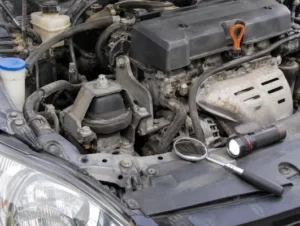
If the engine mounts are accessible, inspect the rubber sections for visible cracks, tearing, separation, or deterioration.
Rubber can become less flexible as it ages and is exposed to heat and operating conditions. A mount that looks damaged should be examined more closely by a qualified inspector.
4. Engine Movement During Operation
Excessive engine movement may indicate a weakened or damaged mount. An inspector can observe engine movement during controlled operating checks and compare the findings with the vehicle manufacturer’s specifications.
Buyers should not attempt to hold the engine, place their hands near moving components, or perform a high-load test themselves. These checks require suitable precautions and professional judgement.
5. Fluid Leakage Around Hydraulic Mounts
Some vehicles use hydraulic engine mounts containing fluid to help control vibration. If the mount’s casing or seals deteriorate, fluid may leak out.
Look for unusual wetness or residue around an accessible mount, but do not assume every fluid mark is coming from the mount. An inspector should identify the source before recommending repairs.
6. Unusual Vibration When Changing Gears
In automatic vehicles, a noticeable thud or vibration when selecting Drive or Reverse can be a reason to investigate the engine and transmission mounts.
However, transmission faults, drivetrain wear, and engine performance issues may create similar symptoms. The vehicle should be assessed as a complete system rather than diagnosing the mounts from one symptom.
How to Inspect Engine Mounts Before Buying a Used Car
A careful inspection should combine a visual assessment, operating observations, and a review of related mechanical components.
Step 1: Check the Mounting Area
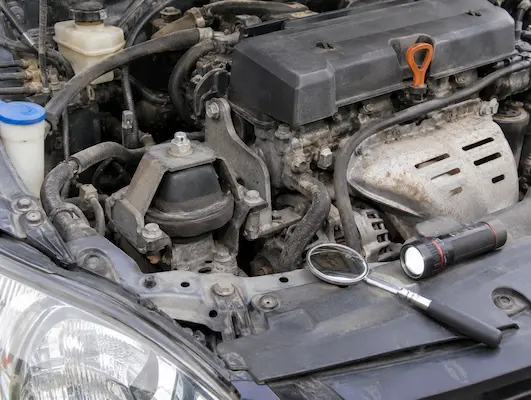
With the engine switched off and the vehicle safely positioned, a qualified inspector can examine accessible mounts and brackets. The inspection should look for cracked rubber, separation, corrosion, damaged brackets, loose or missing fasteners, and signs of previous repairs.
Not every mount is easy to see. Some are positioned beneath the engine or behind other components, which may require professional access procedures.
Step 2: Observe Engine Behaviour at Idle
Start the vehicle under safe conditions and allow it to settle at idle. Observe whether vibration seems excessive or whether unusual movement or knocking is present.
The engine should also be checked for rough running. A misfire or unstable idle can create symptoms that resemble mount problems, so both possibilities need consideration.
Step 3: Check During a Controlled Road Test
During a suitable road test, pay attention to unusual vibration or knocking when moving away, accelerating, slowing down, and changing gears.
A road test can help identify symptoms that are not obvious while the car is stationary. It should be carried out safely, with the seller’s permission and by a suitable driver.
Step 4: Review Related Engine and Transmission Components
Engine mounts work alongside the transmission and other parts of the powertrain. Inspectors should consider nearby hoses, wiring, brackets, exhaust clearances, and signs of contact or movement.
This wider assessment helps avoid overlooking a separate fault or incorrectly blaming the mounts for a noise or vibration.
Can Worn Engine Mounts Affect a Used Car’s Value?
Yes. Damaged mounts may mean an additional repair expense after purchase. If the condition is severe, excessive engine movement can also place stress on connected components.
However, the cost and urgency depend on the vehicle’s make, model, mount design, accessibility, and the actual condition of the component. Buyers should request a clear inspection finding and a repair estimate before negotiating the final price.
Do not reject a vehicle based only on a vibration or knocking sound. First establish the cause and understand whether the issue is minor, repairable, or part of a wider mechanical problem.
Why Professional Inspection Matters Before Purchase
Engine mount problems can be difficult to confirm through a short viewing or a basic test drive. A professional assessment can combine visual checks, engine behaviour, road-test observations, and diagnostic findings to build a more reliable picture of the vehicle’s condition.
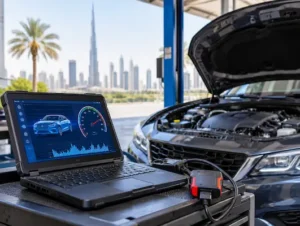
Top Wheels Performance provides car engine inspection in Dubai as part of its vehicle inspection services. The inspection checks engine condition, mounts, abnormal noises, vibration, and other relevant mechanical areas. For buyers who want a broader assessment, the pre-purchase inspection service also covers important vehicle systems and provides a report to help them make an informed decision.
For additional technical guidance, the National Highway Traffic Safety Administration’s vibration troubleshooting bulletin explains that damaged engine mounts can contribute to vibration transfer and recommends inspecting mounts for cracking and contact around mounting points.
Final Checklist Before Buying
Before agreeing to purchase a used car, make sure the following points have been considered:
- Check accessible engine mounts for cracks or separation.
- Look for loose brackets, damaged fasteners, or signs of leakage.
- Observe unusual vibration while the engine is idling.
- Listen for knocking during starting, stopping, and gear selection.
- Pay attention to vibration during a safe road test.
- Ask for professional confirmation if any symptoms are present.
Final Thoughts
Engine mounts may not be the first components buyers think about, but their condition can reveal important information about a used car’s mechanical health. A careful inspection helps distinguish normal engine movement from possible mounting problems and gives buyers a clearer understanding of potential repair costs. Before making a final decision, include engine mounts in a comprehensive vehicle inspection and review the findings before committing to the purchase.
FAQs
1. What are engine mounts in a car?
Engine mounts hold the engine in place and reduce vibrations transferred to the vehicle’s body.
2. What are the signs of damaged engine mounts?
Common signs include excessive engine vibration, knocking sounds, visible rubber cracks, and unusual engine movement.
3. Can I inspect engine mounts without a mechanic?
You can look for visible damage and notice unusual vibrations, but a professional inspection is recommended for accurate diagnosis.
4. Do worn engine mounts affect driving performance?
Yes. Worn mounts can cause excessive engine movement, noise, and vibration, potentially affecting connected components.
5. Should I check engine mounts before buying a used car?
Yes. Checking engine mounts during a pre-purchase inspection can help identify potential repair costs before purchasing the vehicle.