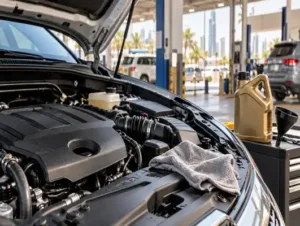
It’s a Thursday afternoon in July, and the dashboard oil light flickers on just as you pull onto Sheikh Zayed Road. You pull over, pop the hood, and realize you have no idea what you’re actually looking at.
Most drivers in the UAE have been there. Checking your engine oil takes less than five minutes, costs nothing, and can save you from a breakdown on one of the hottest days of the year. Yet it’s one of the most skipped parts of car care, mostly because nobody ever walks you through it properly.
This guide does exactly that: a simple, no-guesswork way to check your oil, what the UAE’s climate does to it that drivers elsewhere never have to think about, and when it’s time to stop DIY-ing and bring in a professional.
Why UAE’s Heat Makes This Even More Important
Car manufacturers write their maintenance schedules around moderate climates, not a country where summer temperatures routinely pass 45°C. That gap matters more than most drivers realize.
Heat thins engine oil. As temperatures climb, the oil loses the thick protective film that keeps metal engine parts from grinding against each other, so a viscosity grade that works fine in Europe can run noticeably thinner under a Dubai sun. Stop-and-go traffic during peak hours adds its own thermal stress, and in dustier parts of the UAE, fine sand can work its way into the engine bay and turn clean oil abrasive over time.
The numbers back this up. A 2026 review of more than 20,000 UAE vehicle inspections found engine oil seepage in roughly a quarter of the cars checked, with active leaks showing up in about 15% of them — issues that heat makes worse, not better. It’s part of why UAE road safety campaigns specifically call out engine oil as something to monitor before summer hits, alongside coolant, tyres, and battery health.
How to Check Your Engine Oil: Step-by-Step
You don’t need any tools for this, just a clean rag or paper towel and five minutes.
- Park on level ground. A slope throws off the reading, making the oil look higher or lower than it actually is.
- Let the engine rest. Check it cold, before you’ve driven that day, or switch the engine off and wait 5–10 minutes so oil already circulating has time to drain back into the pan. Never check oil with the engine running.
- Open the hood and find the dipstick. It usually has a brightly colored handle, yellow or orange, and sits near the front of the engine.
- Pull it out and wipe it clean. Use your rag to wipe the full length of the dipstick so you’re reading fresh oil, not a smear from last time.
- Reinsert it fully, then pull it out again. This is the reading that counts.
- Check the level against the markings. Most dipsticks show a min and max mark, or two small holes or crosshatching. The oil film should sit between the two.
- Look at the color and feel. Rub a small amount between your fingers before wiping it off — more on what to look for below.
Reading What You Find: Level, Color, and Texture
Level. Below the minimum mark means it’s time to top up. Check your owner’s manual for the correct oil grade first, since using the wrong one can do more harm than running slightly low.
Color. Fresh oil is a clear amber or light brown. It will darken naturally with use, and that alone isn’t a red flag. What is a red flag: oil that looks milky, grey, or has a frothy, coffee-with-cream appearance. That usually points to coolant mixing into the oil, a serious issue worth attention quickly, not something to put off.
Texture. Rub a drop between your fingers. It should feel smooth. A gritty or sandy texture means metal particles or dust have worked their way in — in UAE conditions, this is worth taking seriously rather than assuming it’s normal wear.
Smell. A sharp, burnt smell usually means the oil has been run too hot for too long, common after a UAE summer of stop-and-go traffic, and is a sign the oil has lost much of its protective ability.
How Often to Check — and When to Call In a Professional
In the UAE, check your oil level at least once a month, and always before a long drive, whether that’s to Hatta, Fujairah, or across the border for the weekend. If you’re doing a lot of summer driving in traffic, checking every couple of weeks is a smarter habit than waiting for the warning light.
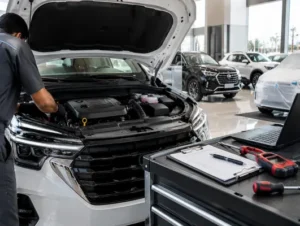
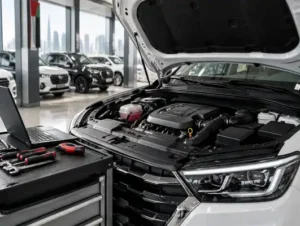
A dipstick check tells you a lot, but it won’t catch everything. It won’t tell you if the oil pump is struggling, whether there’s a slow leak building pressure elsewhere, or if heat has already started affecting seals and gaskets you can’t see. If you’ve noticed knocking sounds, a burning smell that won’t go away, or oil that looks consistently low no matter how often you top it up, that’s the point to stop guessing. A professional Engine Inspection in Dubai checks compression, leaks, and wear points a dipstick simply can’t reach, and it’s worth knowing about before a small oil issue turns into a failed inspection or a costly repair.
Keep It Covered: Annual and Pre-Purchase Checks
Oil condition is one of many things reviewed as part of a broader Annual Inspection in Dubai, useful whether or not your registration renewal is due, since it catches developing issues while they’re still cheap to fix.
If you’re buying a used car, checking the oil yourself during a viewing is a good instinct, but it only tells you what’s happening right now, not what’s been happening for the last five years. A full Pre Purchase Car Inspection in Dubai goes much deeper, covering engine health, accident history, and the mechanical issues a quick dipstick check was never going to reveal.
Checking your oil yourself is a five-minute habit worth building. Knowing when to hand it over to someone who can look deeper is just as valuable.
Ready for a deeper check? Call or WhatsApp Top Wheels Performance on +971 54 509 5755.
Frequently Asked Questions
Should I check engine oil when the engine is hot or cold?
Check it cold, before your first drive of the day, or after the engine has been off for 5–10 minutes. Never check oil while the engine is running.
How often should I check my oil in the UAE?
At least once a month, and before any long drive. In peak summer heat, checking every two weeks is a safer habit.
Is dark oil always a sign of a problem?
No. Oil darkens naturally with normal use. Milky, frothy, or gritty oil is the real warning sign, not color alone.
What if my oil level is low but the car seems fine?
Top it up with the manufacturer-recommended grade and keep an eye on it. If it keeps dropping, that points to a leak or burn-off worth having checked.
Can UAE heat really affect my oil that much?
Yes. Summer temperatures regularly above 45°C thin oil faster than in moderate climates, which is why UAE maintenance schedules are often shorter than the manufacturer’s default recommendation.